March 21, 2020
Just a quick note on the face mask thing.
To start … to the healthcare workers: I am so very sorry. The system that was supposed to protect you failed.
PPE, or personal protective equipment is what you know. It’s what you trained with: N95 masks, hoods, gloves – all single use per patient. You did not train for this.
Homemade masks are not PPE. But they may be the best we can do. Some are going to get sick because of this. Things are going to go wrong. Be gentle with each other. Forgive yourself and others. You did not create this situation. It is not your fault.
GRRRR.
Anyhow. Sewing masks.
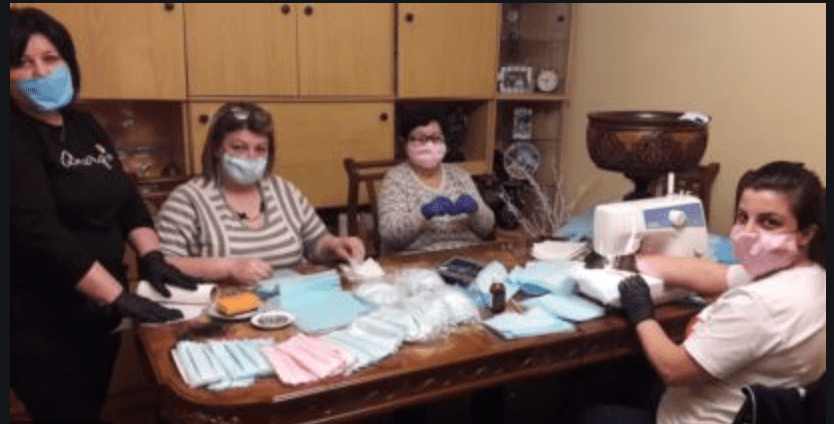
The face masks that so many of you are sewing for healthcare folks are really gifts of love. I hope you all keep going. That, alone, is very helpful.
We cannot know how well homemade masks will work. With zero controls on manufacturing, we just can’t. Cloth face masks studied in Vietnam showed they were marginal. Those masks were very basic, and I’m sure we can do better, but the science is not great.
Keep searching the internet for designs, fabrics, charcoal filters you can sew into fabrics, other filters that may work. People are posting information every minute on the internet on work-arounds. Amazon has stock of filtering materials – someone has to figure out if any of those are harmful or helpful. We are going to have to think, read, learn and try.
PLEASE, IF YOU ARE MAKING MASKS:
• BAG THEM IN ZIP-LOCK BAGS.
- IF YOU ARE USING ANY OFF-MARKET FILTERS OR FABRICS, IT WOULD BE AWESOME IF YOU COULD IDENTIFY WHAT IT IS AND PUT THAT IN THE BAG
- INFORMATION IS KEY TO SUCCESS.
We can find additional benefits from homemade masks; and we should exploit those as much as possible.
From my reading I would suggest using homemade masks in this way (I am using the small amount of available research and this is my best guess for this guidance):
1. Masks are a good reminder to keep your hands off your face, and if you do touch your face, it would be the mask.
2. Taking masks on and off (and removing traditional PPE) are often where transmission happens. Be incredibly meticulous when taking your masks off. Wash your hands perfectly, as the outside of the mask may be laden with droplets full of virus.
3. Re-using these home-made masks if they haven’t been sanitized – super hot wash – looks like a bad idea. Try not to.
4. These masks should be worn for the shortest time possible before being sanitized; preferably less than an hour of patient contact time. (Truthfully, this is a big guess.)
5. Behave like you are not protected at all. Keep out of the 6 foot hot zone. Jumping in to provide emotional support is natural for us; just don’t. Every contact with a sick patient, without proper PPE, should be minimized as much as possible. This is NOT how you have been trained, so it will not feel normal or right.
6. Don’t be a hero. I mean, you showed up, so you’ve got that covered already, just don’t double down on it. Keep away from your patients if you do not have proper PPE. Just keep away as far as possible. I know that is not how you’re built or how you are trained – you’ve got to stop it.
7. People are going to die. You are going to want to be with them. Unless you have full PPE; don’t. I love you, my friends, but this is a marathon and we need you for the whole race. They had to learn this in Italy. Hundreds a day die alone so nurses and doctors can stay on their feet and keep the rest alive.
8. We need you healthy. Be very selfish about that. We’re depending on it.
If you are making masks, you are doing the right thing. Your work sends the love of a grateful community to those who need it most.
Thank you.
Try. Learn. Repeat.
 Big Word • Small World
Leave a comment